
The production quality of B2B video content in the Middle East has improved dramatically over the past five years. Brands that were shooting on phones in 2019 are now working with proper crews, proper studios, proper budgets. The results, in terms of impact, haven’t kept pace.
The gap is strategic, not technical. Most B2B video briefs start from the wrong place; they start from what the brand wants to say, rather than from what the audience needs to hear or what the video format can uniquely deliver. They should be focusing on their target audiences and how best to engage with them.
The formats that work in B2B video tend to do one of a small number of things very well:
- They put a credible human on camera saying something specific and opinionated. Not a talking-head corporate message, an actual person with a real point of view.
- They show a product or technology doing something that’s genuinely difficult to convey in words. A live demonstration, a real-world deployment, a before/after that’s visceral rather than abstract.
- They place a customer voice on the record in a way that’s specific and evidenced. Not ‘we’re really happy with the solution’, but what problem it solved, how, and what changed.
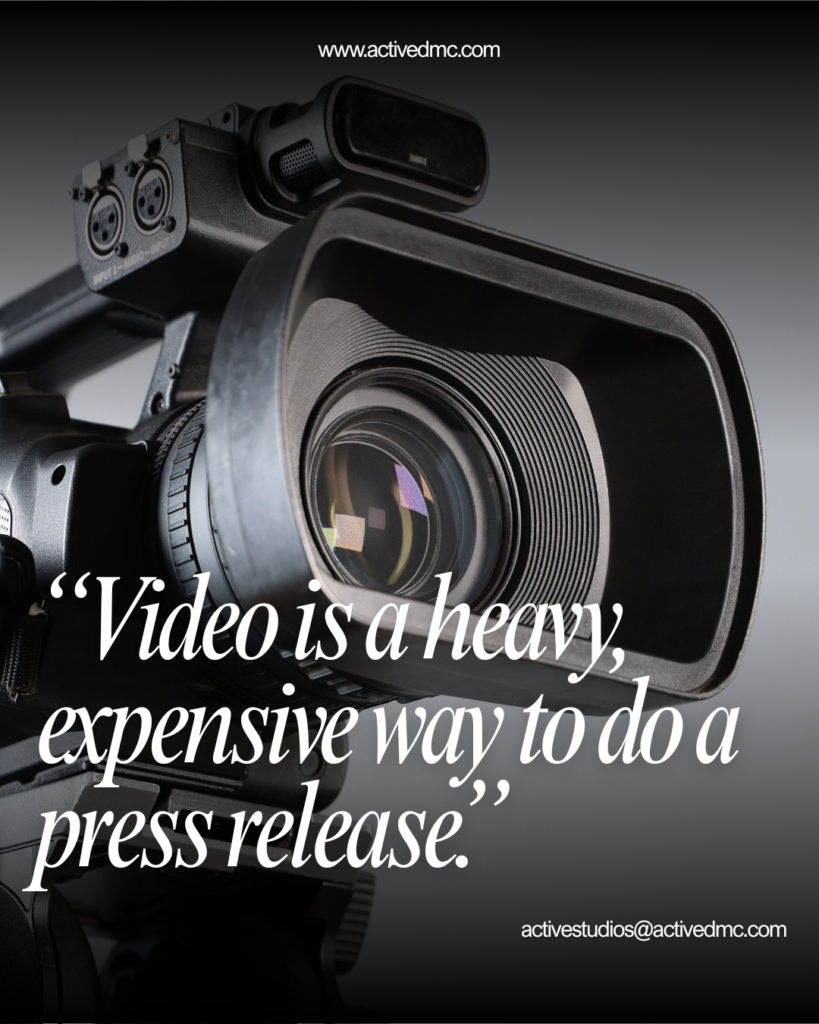
Content that doesn’t do at least one of these things well is usually doing the same job as a press release, and video is a heavy, expensive way to do a press release.
This is why we created Active Studios as an integral service offering for the Agency rather than a separate production house. When strategy and production are in the same room from day one, the briefs are sharper, the formats are right-sized, and the content delivers the attention it’s made for.
Planning a video project? Talk to us at activestudios@activedmc.com